


Geopolitical Events and the Markets: Keeping Perspective in Uncertain Times
With recent headlines surrounding political developments in Venezuela, you may be wondering how events like this — and other geopolitical flashpoints around the world — can impact financial markets and your portfolio.
Geopolitical news often feels unsettling because it is sudden, unpredictable, and outside the realm of normal economic reporting. Whether it’s political instability, military conflict, sanctions, or diplomatic shifts, these events tend to dominate headlines and raise understandable questions for investors: Should I be worried? Does this change the outlook? Should I be doing something differently?
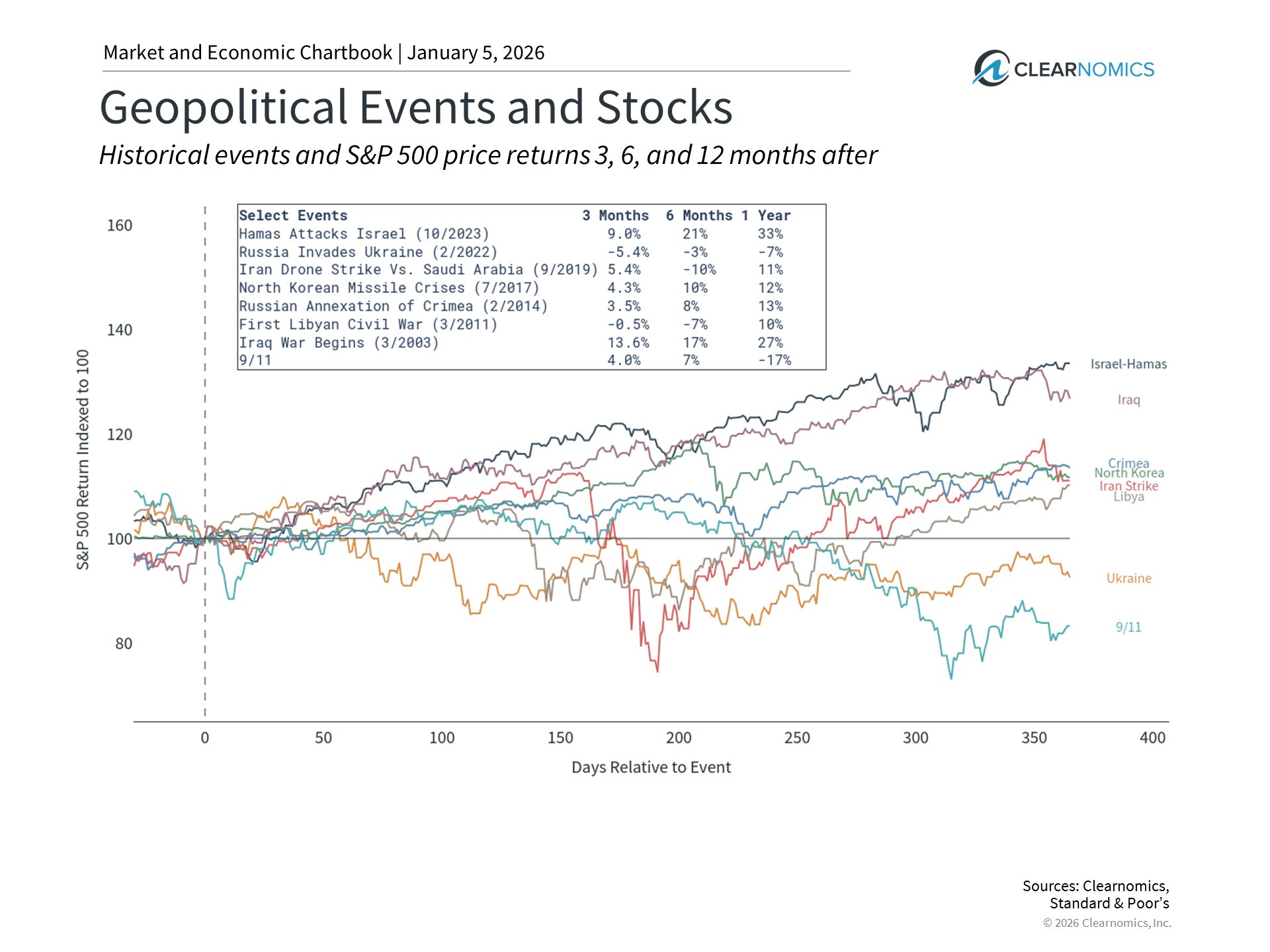
History suggests that while geopolitical events can create short-term market volatility, their long-term impact on diversified portfolios has typically been limited.
Why Geopolitical Events Often Have Limited Lasting Market Impact
Markets are influenced by many forces, but the primary long-term drivers tend to be consistent: economic growth, corporate earnings, productivity, innovation, and interest rates. Most geopolitical events — even very serious ones — do not materially alter these underlying fundamentals.
This pattern has repeated itself across decades. From regional conflicts and regime changes to trade disputes and international sanctions, markets have often reacted initially, only to recover as investors refocus on economic realities.
That doesn’t mean these events are unimportant. Rather, it highlights that markets are forward-looking and tend to adapt more quickly than headlines might suggest.
The Primary Economic Channel: Energy and Commodities
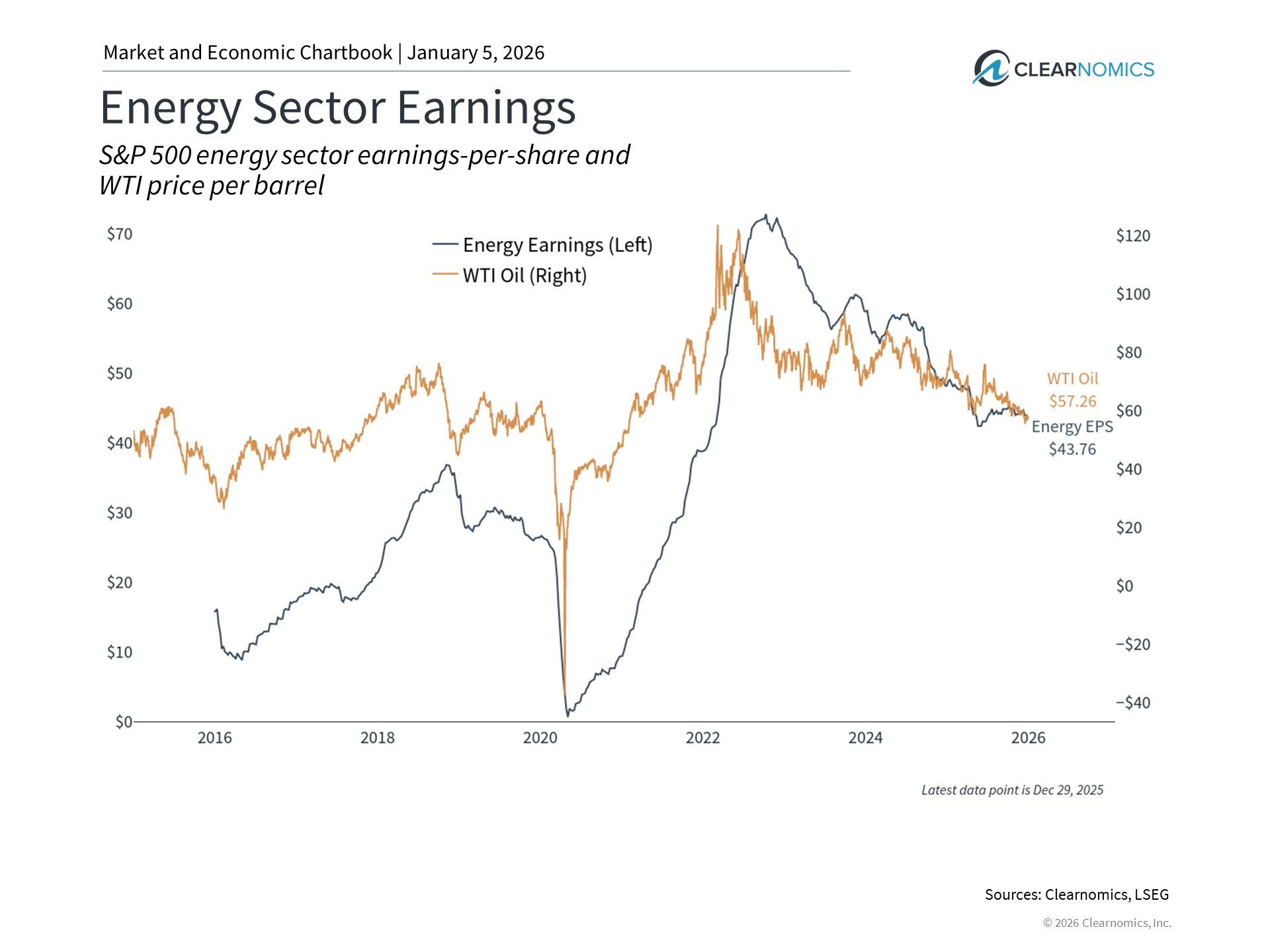
When geopolitical events do influence markets, it is often through commodity prices, particularly oil. Energy remains a critical input for global economic activity, so disruptions — or potential disruptions — can affect inflation expectations, corporate costs, and consumer spending.
However, not all geopolitical events have the same impact. Situations that disrupt existing supply tend to matter far more than those that might eventually increase production. Even then, changes in energy markets usually unfold over time and are influenced by many global factors, including production decisions by other countries, technological advances, and shifts in demand.
Importantly, today’s global energy landscape is very different from past decades. The United States is now the world’s largest producer of oil and gas, which has helped reduce the domestic economic impact of external shocks compared to earlier eras.
Why Many Countries Have Little Direct Market Influence
Another key point for investors is that not every country plays a meaningful role in global financial markets. Some nations have small or inaccessible stock markets, limited integration into global indices, or bond markets that are already distressed.
In those cases, market effects tend to be indirect — driven more by sentiment or secondary impacts like commodity prices — rather than by direct exposure within diversified portfolios. This helps explain why even dramatic political events may leave little lasting footprint in global equity or bond markets.
The Role of Perspective in Long-Term Investing
Geopolitical uncertainty is not an exception — it is a constant. What changes is the location and the headlines.
Attempting to reposition portfolios in response to geopolitical events is rarely successful and often increases risk rather than reducing it. Market timing around uncertainty has historically proven difficult, even for professionals.
Instead, resilient portfolios are built with the assumption that uncertainty will occur. Diversification, appropriate risk alignment, liquidity planning, and a long-term strategy are designed to carry investors through unpredictable environments — not avoid them altogether.
The Bottom Line
Geopolitical events can feel alarming in the moment, particularly when headlines are dramatic and information is evolving quickly. History shows, however, that markets have repeatedly demonstrated an ability to absorb these shocks and refocus on long-term fundamentals.
For investors, the most effective response is rarely reaction — it’s perspective. Staying aligned with your financial goals and maintaining a disciplined plan remains one of the most powerful tools for navigating an uncertain world.
If you ever find yourself wondering how current events fit into your broader strategy, I’m always here to talk through the bigger picture.
